


Robert Krulwich
Robert Krulwich works on radio, podcasts, video, the blogosphere. He has been called "the most inventive network reporter in television" by TV Guide.
Krulwich is the co-host of WNYC's Radiolab, a radio/podcast series distributed nationally by NPR that explores new developments in science for people who are curious but not usually drawn to science shows. Radiolab won a Peabody Award in 2011.
His specialty is explaining complex subjects, science, technology, economics, in a style that is clear, compelling and entertaining. On television he has explored the structure of DNA using a banana; on radio he created an Italian opera, "Ratto Interesso" to explain how the Federal Reserve regulates interest rates; he has pioneered the use of new animation on ABC's Nightline and World News Tonight.
For 22 years, Krulwich was a science, economics, general assignment and foreign correspondent at ABC and CBS News.
He won Emmy awards for a cultural history of the Barbie doll, for a Frontline investigation of computers and privacy, a George Polk and Emmy for a look at the Savings & Loan bailout online advertising and the 2010 Essay Prize from the Iowa Writers' Workshop.
Krulwich earned a Bachelor of Arts degree in history from Oberlin College and a law degree from Columbia University.
-
It's been frustrating, this 100-year search by physicists all over the world for a Unified Theory of Everything. And Tim Blais, physics grad student, a capella singer and Queen fan, feels their collective pain. Don't miss the Albert Einstein hand puppet in a hail storm, crying his heart out in Blais' Bohemian Rhapsody on String Theory.
-
 Two short tales: One about bad guys in a fishing village in Pakistan, the other about good guys in Baghdad. And the question is posed: in the long arc of time, which side prevails, those with the impulse to take or those with the impulse to give?
 -
 What I'm going to say sounds ridiculous, but once upon a time it wasn't ridiculous at all. You could wake up one morning in North America and decide to walk to Morocco, have breakfast, and a few hours later, there you are — in Africa. No sweat. Or wander from Australia into Bangladesh. Not a problem. Let me show you how.
 -
 Suppose you wanted to slip into a space quietly, secretly. Would you wear a dazzling, many-colored ball gown? I think not. So how do we explain what the Dutch government is doing on Google Maps? Is this any way to keep a secret?
 -
 If you care about the environment, if you're a good person, you try (in many little ways) to cut back, do with less, live more simply. But when nobody's watching, when you're feeling naughty, you dream of "More-ing," which is both totally irresponsible and crazy fun.
 -
 If we had enough time, enough brain power, the right computers, the occasional genius, is there any limit to what we can know about the universe? Or is nature designed to keep its own secrets, no matter how hard we try to crack the code? What can we never know?
 -
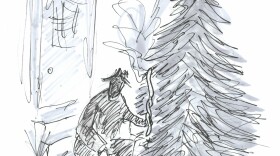 There was a spruce tree in Stanley's garden, and when September rolled around, a family of garden snakes used it to sunbathe. They'd squiggle out on a branch, flop down and warm themselves in the sunshine — sometimes dangling in braided pairs. Stanley, envious, decided to join in ... and here's what happened next.
 -
 Snails getting ready for winter are natural carpenters. They construct doors, or maybe you'd call them walls, inside their shells. They do this without hammers, nails or cement. Instead, they use their foot — and of course, their favorite material, mucus. Welcome to the ingenious world of snail construction.
 -
 Drones are for spying, right? Right. But if Jasper van Loenen's idea works, drones will also become private moving vans. Crows won't like this. Trees won't like this. I'm not sure I like this. But you've got to see Jasper's instant-drone deliver a bicycle wheel across campus ...
 -
A New York design team has just produced an invisibility cloak for your cellphone. Pop it in and no government, no merchants, no friends, no one knows where your phone is. Another design team in Canada says it could do stuff like this — but it won't. Who's right?


